
Top 6 AI tools for scaling creative production in 2026
Research
Claron Kinny
|
Growth Marketer
Reviewed By Satej Sirur
If you're producing creative for a brand in 2026, you've probably noticed the volume math changing faster than your production setup. Meta, Google, and TikTok need fresh variants every week. Amazon, Walmart, and Target each have their own image specs and claim restrictions. Then multiply all of that by audience segments, languages, and A/B tests.
One product launch across five retailers and three social platforms can mean hundreds of assets for a single SKU. If that sounds familiar, you're not alone.
This post covers seven tools that handle creative production at scale. The right choice depends on where your bottleneck actually sits.
Key takeaways
|
|---|
What your creative production tool needs to handle at scale
These are the six areas worth paying attention to as you evaluate.
Platform compliance across channels
You already know this one: Amazon, Walmart, Meta, Google, TikTok, and retail media networks all have their own image specs, file formats, and content restrictions. They update regularly. The tools that handle this programmatically save your team from checking every asset manually.
Brand governance at SKU scale
Staying consistent across a five-asset campaign is manageable. Staying consistent across 100+ products, five retailers, and a dozen ad placements is where most setups strain. Tools that enforce brand rules at the template level take that weight off your review cycles.
Who does the work after you buy
Some tools are self-serve platforms your team operates. Others are managed services where you brief and receive finished assets. A self-serve platform gives you control, but requires time and effort to learn. A managed service gives you capacity without adding headcount.
Multi-format, multi-channel versioning
PDP images. A+ content. Social variants. Retail media. Display banners. Video. If you're producing across all of these (and most brands are), check whether the tool handles all of them or just the ones that make the demo look good.
Personalization and localization
Audience-specific messaging, regional campaigns, language variants, A/B tests: these multiply your asset count per SKU from single digits to dozens. Some tools automate this through feeds and built-in translation. Others leave that multiplication entirely to your team.
Speed at volume
One asset in 30 seconds is a useful demo metric. Two hundred assets from a single brief in under 24 hours is the one that tells you whether the tool can keep up with your actual launch calendar. Worth asking about batch turnaround specifically.
How the seven tools compare
Here's a quick snapshot before the detailed reviews. Each tool is evaluated on the same six criteria.
Tool | Best for | Pricing | Self-serve or managed |
|---|---|---|---|
Rocketium AI Studio | Consumer brands producing across retailers, social, and ad platforms at SKU scale | Per-asset credits ($15-25/credit) + platform fee | Managed service with self-serve control whenever needed. |
Celtra | Enterprise display and social campaign production with full self-serve control | Seat-licensed, quote-based. No public pricing | Self-serve |
Smartly.io | Media buyers who want creative production and ad buying in one system | 3-5% of ad spend + ~$5K/month minimum. ~$90K median annual contract | Self-serve |
The Brief AI | Agencies and performance marketers producing digital display and social ads | $29/month (Pro), $79/month (Ultra), $49/seat (Team). Enterprise custom | Self-serve |
AdCreative.ai | Small teams running social campaigns who want fast static ad generation | $20-999/month. Credits don't roll over on most plans | Self-serve |
Bannerflow | Multi-market brands producing programmatic display banners at volume | Quote-based. No public pricing | Self-serve |
Top 6 AI tools to scale creative production
Rocketium AI Studio
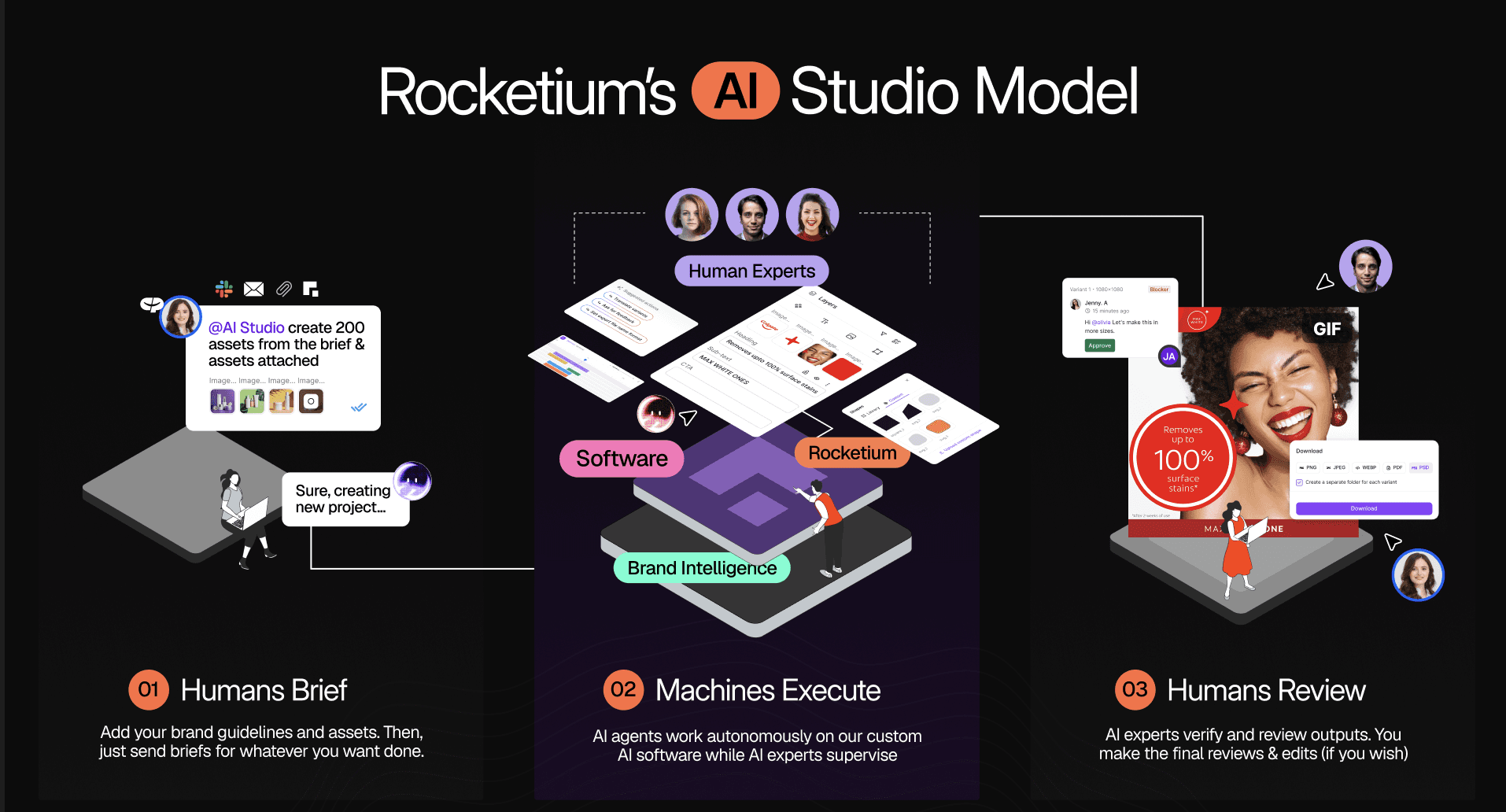
Rocketium AI Studio is a managed creative production infrastructure combining agentic AI, a creative OS, and human experts.
Best for: Brands producing across retailers, social platforms, and ad networks at SKU scale.
What it does well
Every job starts with research, not production. Before any asset is created, the team analyzes four areas: Audience, Brand, Competition, and Performance. That research shapes a core creative idea before production begins.
From there, whether you need existing designs resized across formats, new assets built from scratch (copy, translation, imagery, video), or master layouts and storyboards, AI Studio handles all three. AI agents do the production. Human designers supervise quality. Automated compliance checks cover every platform.
Your team doesn't need to learn new software. You submit a brief, you review finished assets. Everything in between is handled by Rocketium's experts and AI agents.
Both self-serve (brief to campaign in minutes via trained AI agents) and managed production (under 4-hour turnaround) are available.
Where it falls short
Not a tool you sign up for and start using. For lighter production needs, the investment may be more than the workload justifies.
Pricing
Per-asset credits ($9/credit). One static asset = one credit. Video over 15 seconds = two credits. Credits only consumed on finalized exports, not iterations.
AdCreative.ai
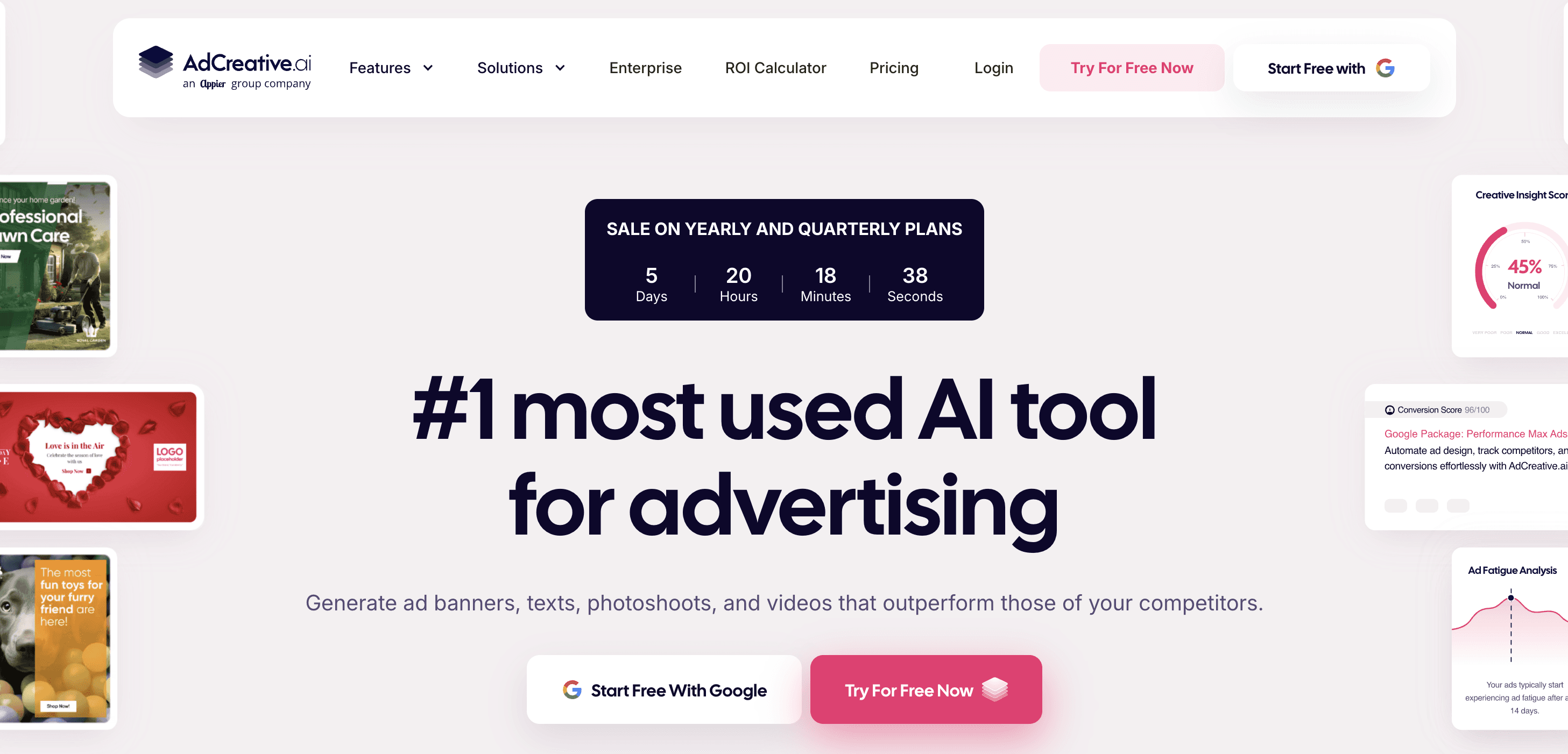
AdCreative.ai generates conversion-optimized static ad creatives at scale across Meta, Google, and LinkedIn. Its standout feature is Creative Scoring AI, which predicts creative performance before launch based on analysis of over 450 million ad cases. For performance teams running high-volume social campaigns, that predictive layer reduces wasted spend on underperforming assets before they go live.
Where it breaks down for consumer brands is retailer compliance. AdCreative.ai has no awareness of Amazon, Walmart, or Target platform requirements. Assets arrive formatted for social placements, not product detail pages or retailer ad networks. There's no human QA layer and no managed services workflow. Your team carries the compliance and revision work manually.
It's a capable tool for social-first performance teams. For consumer brands managing retailer-specific creative at volume, the compliance gap makes it a partial solution at best.
Pros: Strong Creative Scoring AI trained on 450M+ ad cases. Fast generation at volume. Broad platform coverage for social and display.
Cons: No retailer compliance layer. No human QA. Self-serve only. Billing practices flagged in G2 and Trustpilot reviews. Manual revision still required for retailer-ready output.
G2 rating: 4.3/5 based on 700+ verified reviews
Pricing: Starter at $39/month (10 credits). Professional at $149/month (100 credits). Ultimate at $359/month (500 credits). Enterprise custom pricing. 7-day free trial available.
Canva
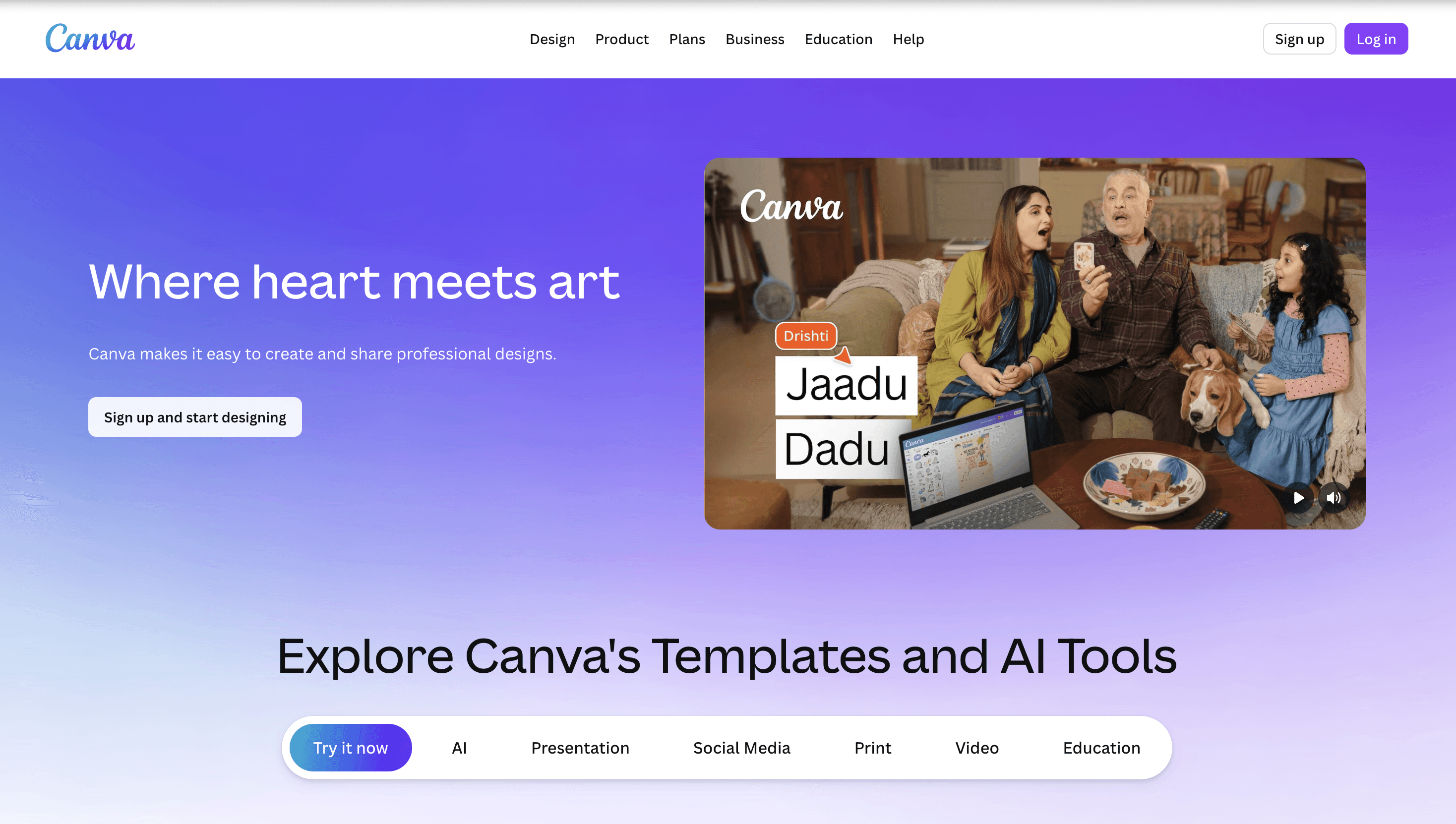
Canva is a design platform with AI-assisted features including Magic Design, Magic Resize, Background Remover, and AI image generation via Magic Studio. Its brand kit enforcement ensures consistent colors, fonts, and logos across all output, and its template library covers most standard ad formats across social and display. With a 4.7/5 G2 rating across nearly 7,000 reviews, it's the most widely adopted design tool in its category.
For teams with design skills who need flexible, high-quality static creative, Canva is genuinely useful. Magic Resize converts a single design to all required platform sizes automatically, which removes a real manual bottleneck for smaller teams.
The limits show up at retailer scale. Canva has no retailer compliance intelligence, no automated brief-to-asset workflow, and no human QA. Every asset still requires a designer's judgment before it's ready for Amazon or Walmart. At low volume that's manageable. At 500 assets a month across multiple retailers, it becomes a headcount problem. G2 reviewers also note that output can look recognizably template-based, which creates brand differentiation issues for consumer brands managing multiple product lines.
Pros: Intuitive interface, accessible for non-designers. Strong brand kit enforcement. Large template library. Magic Resize saves manual resizing time. Generous free tier.
Cons: No retailer compliance layer. No automation beyond resizing. No managed services. Heavy template reliance can limit brand differentiation. Production at scale requires significant designer time.
G2 rating: 4.7/5 based on 6,896 verified reviews
Pricing: Free tier available. Pro at $15/month ($120/year). Teams at $10/user/month (3-user minimum). Enterprise custom pricing.
Omneky
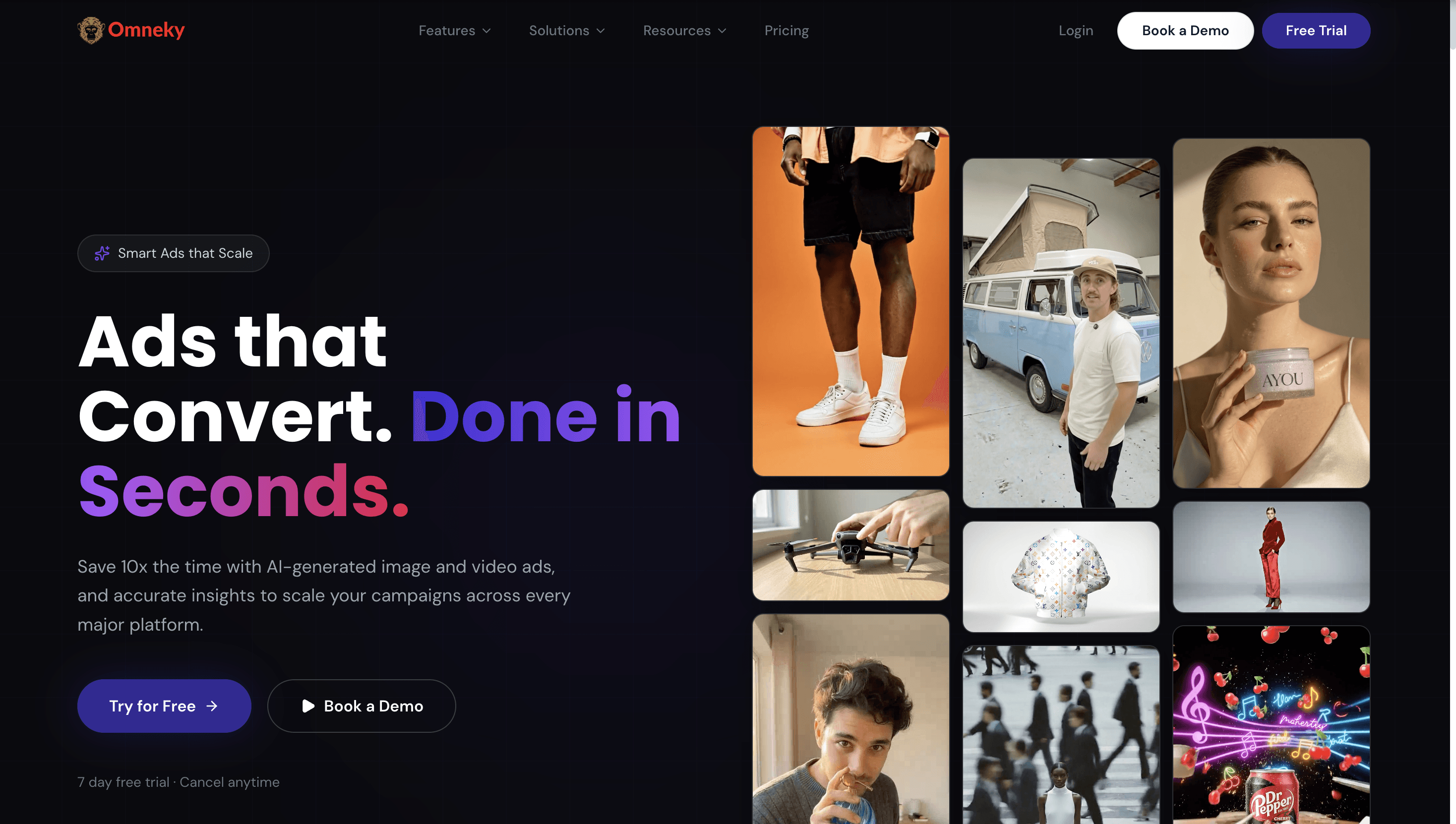
Omneky uses AI to generate personalized image and video ad creative tied directly to performance data. Its Brand LLM enforces brand standards through fine-tuned language models, and its Campaign Launcher supports omnichannel campaigns across Meta, Google, TikTok, LinkedIn, and Reddit. The platform generates 5-10 customized ad creatives per brief, saving teams significant time on creative iteration.
The performance feedback loop is the strongest part of the product. Omneky's AI analyzes what designs and messaging resonate with your specific audiences and uses those insights to generate ads most likely to drive engagement. For performance teams running high-volume personalized social campaigns, that closed loop between performance data and creative generation reduces testing waste.
The gap for consumer brands mirrors AdCreative.ai. Omneky is built for social and digital ad placements, not retailer-specific production. There's no Amazon or Walmart compliance layer, no human QA, and no managed services workflow. For brands whose primary challenge is social ad performance, it's a strong option. For brands managing retailer creative at scale, the compliance gap remains.
Pros: Performance-informed creative generation tied to audience data. Brand LLM enforces brand consistency. Omnichannel campaign management across 5 platforms. 14-day free trial.
Cons: No retailer compliance intelligence. No human QA. Limited independent review data outside G2. Pricing transparency could be improved.
G2 rating: 4.7/5 based on 700+ reviews
Pricing: Standard plan at $99/month. Custom enterprise options available. Annual billing discounts available. 14-day free trial.
Smartly.io
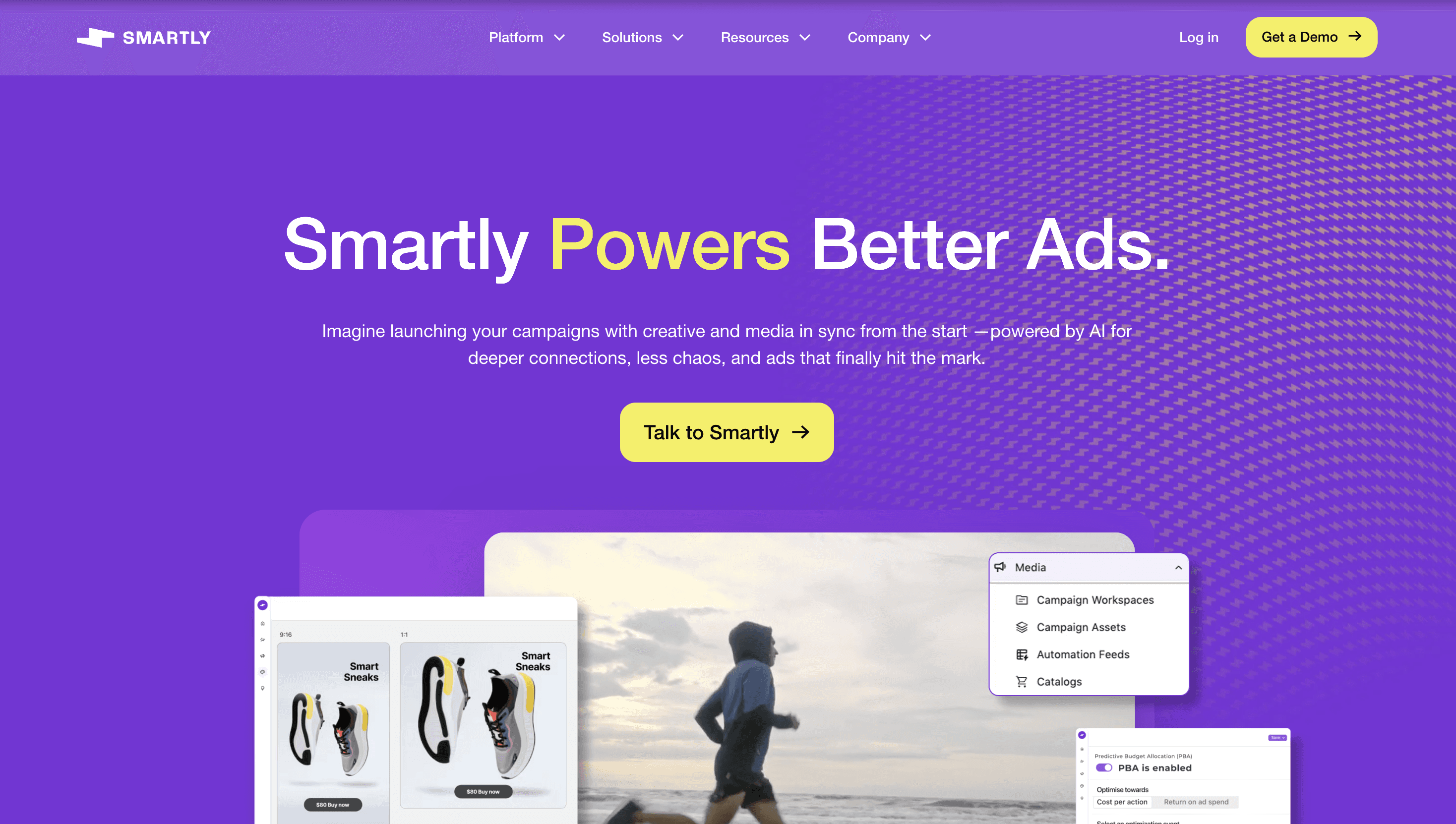
Smartly.io is an enterprise social advertising platform managing nearly $5 billion in ad spend across 700+ brands worldwide. Its core strength is dynamic creative optimization (DCO): assembling ad variations from component assets, headlines, images, and CTAs, then testing combinations automatically to surface top performers across Meta, TikTok, Google, and Pinterest. Customers like Walmart, L'Oreal, and Nestle use it for cross-channel social advertising at significant scale.
The platform's AI Studio has generated 1.9 million creative assets across 260+ customers since its 2025 launch, with documented case studies showing 30x faster creative production and an average 27% performance lift compared to static creatives.
The trade-offs are real. Smartly.io pricing starts at approximately $2,500/month and scales as a percentage of media spend, with median annual costs cited in reviews around $90K. Setup is complex, G2 reviewers consistently note a steep learning curve, and the platform is built for enterprise advertising operations, not for creative production teams trying to solve a retailer compliance or asset volume problem. There's no managed services layer and no human QA built into the workflow.
Pros: Best-in-class DCO for enterprise social advertising. Manages $5B in ad spend across 700+ brands. Strong Meta and TikTok integrations. Documented performance improvements in case studies.
Cons: Pricing starts at ~$2,500/month, scales with ad spend. Steep learning curve. No retailer compliance layer. No managed services. G2 reviewers flag chat support quality as inconsistent.
G2 rating: 4.4/5 based on 468 verified reviews
Pricing: Custom pricing based on percentage of media spend. Starts at approximately $2,500/month. No free trial; demo available.
Superside
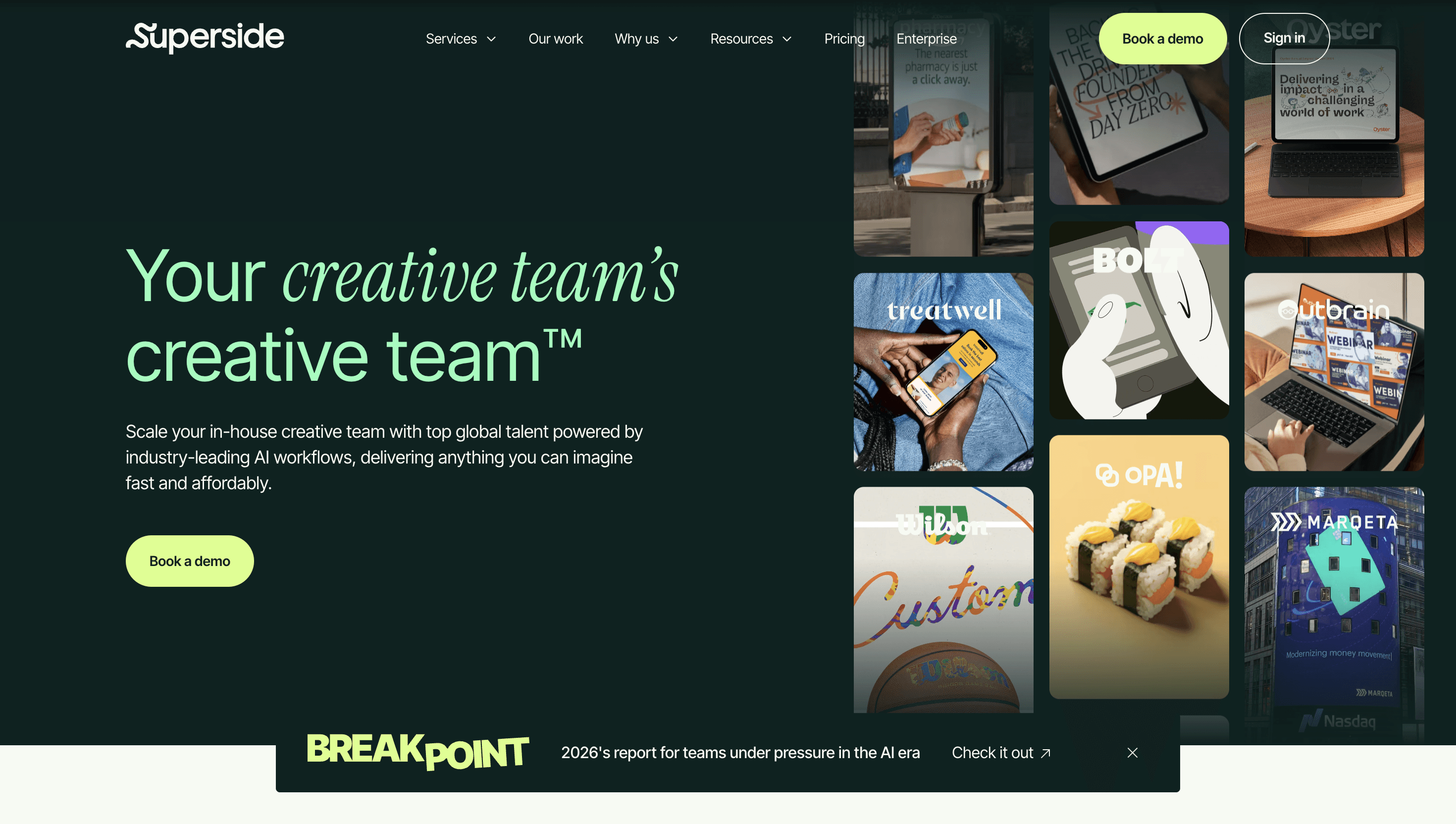
Superside is a subscription-based managed creative service pairing brands with a globally distributed team of designers and project managers. It covers 60+ design categories including ad creative, motion graphics, video production, branding, and presentations. Clients include Amazon, Reddit, Salesforce, and Puma. Turnaround is typically 48 hours on standard delivery, with 12-24 hour fast options available.
The speed advantage over traditional agencies is real. Superside reports 40% lower costs than traditional creative agencies, 98% on-time delivery, and 94% customer satisfaction. For enterprise marketing teams that need varied, ongoing creative work across multiple categories, the subscription model offers predictability that agency retainers don't.
The gap relative to AI Studio is meaningful for consumer brands specifically. Superside is a design service with AI-assisted workflows. AI Studio is an AI production system with human supervision. The difference shows up in retailer compliance, where Superside designers apply their own judgment rather than programmatic enforcement, and in per-asset cost, where AI Studio's credit model delivers 30-70% savings at volume. G2 reviewers also note that Superside works best when the client has someone experienced in writing clear design briefs internally.
Pros: High creative quality across 60+ categories. Faster and more cost-effective than traditional agencies. Dedicated project manager per client. Strong enterprise track record.
Cons: Starts at $10K/month with annual commitment. No programmatic retailer compliance. Per-asset cost higher than AI Studio at volume. Requires client to write strong briefs. Less suited for high-frequency production at retailer scale.
G2 rating: 4.5/5 based on 99 verified reviews
Pricing: Starts at $10,000/month. Annual commitment required. Custom pricing. No free trial; demo available.
To sum up
The tools on this list solve different problems. That's worth being direct about.
AdCreative.ai, Canva, and Omneky are well-built for what they do: generating social ad creative at volume, fast. If your primary bottleneck is Meta and Google campaign creative, any of them will move faster than an agency. Smartly.io is the right call if you're managing eight-figure ad spend across multiple social platforms and need DCO at enterprise scale. Superside works for brands that want managed creative quality without building an in-house team.
Where all five fall short is the same place. None of them were built for the production reality of a consumer brand managing multiple product lines across Amazon, Walmart, and Target. Retailer-specific compliance, brand consistency at 500-asset scale, and human QA in the delivery workflow aren't features you can add on. They have to be in the foundation.
That's the gap Rocketium AI Studio closes. It gives your team a self-serve platform to brief, review, and download. It gives you AI agents and human experts handling everything in between. And it gives you retailer intelligence that enforces compliance programmatically, so assets arrive ready, not almost ready.
If your creative queue is the reason your media budget isn't working as hard as it should, book a 20-minute AI Studio demo. Bring a real brief. You'll have results in 24-48 hours. Book a demo with Rocketium. |
|---|