
Agentic AI is rewriting creative design in 2026
Podcast & webinar
Cameron Nelson
|
Sr. Marketing Manager
Reviewed By Satej Sirur
Creative Operations in 2026: Creative Fatigue Is the Real Story
Creative professionals are not intimidated by artificial intelligence — they are overwhelmed by the operational burden of modern creative production. The average marketing campaign still passes through multiple tools, fragmented workflows, slow approvals, manual resizing, brand compliance checks, and feedback loops that drain time before ideas ever reach the market.
This is the quiet crisis of creative operations: the ideas are getting bigger, more personalized, and more multi-format, yet the workflows supporting them have barely evolved. The constraint has shifted from imagination to execution.
Marketing teams talk about AI replacing creative work, but the real challenge is how to support creative people so they can actually produce at the speed the modern digital ecosystem demands.
Design Trends in 2026: From Loud Aesthetics to Personalization at Scale
One of the most important design trends of 2026 is the move away from loud, performative aesthetics toward contextual personalization. Brands are now expected to produce content that is not just creative, but relevant to specific personas, placements, and channels.
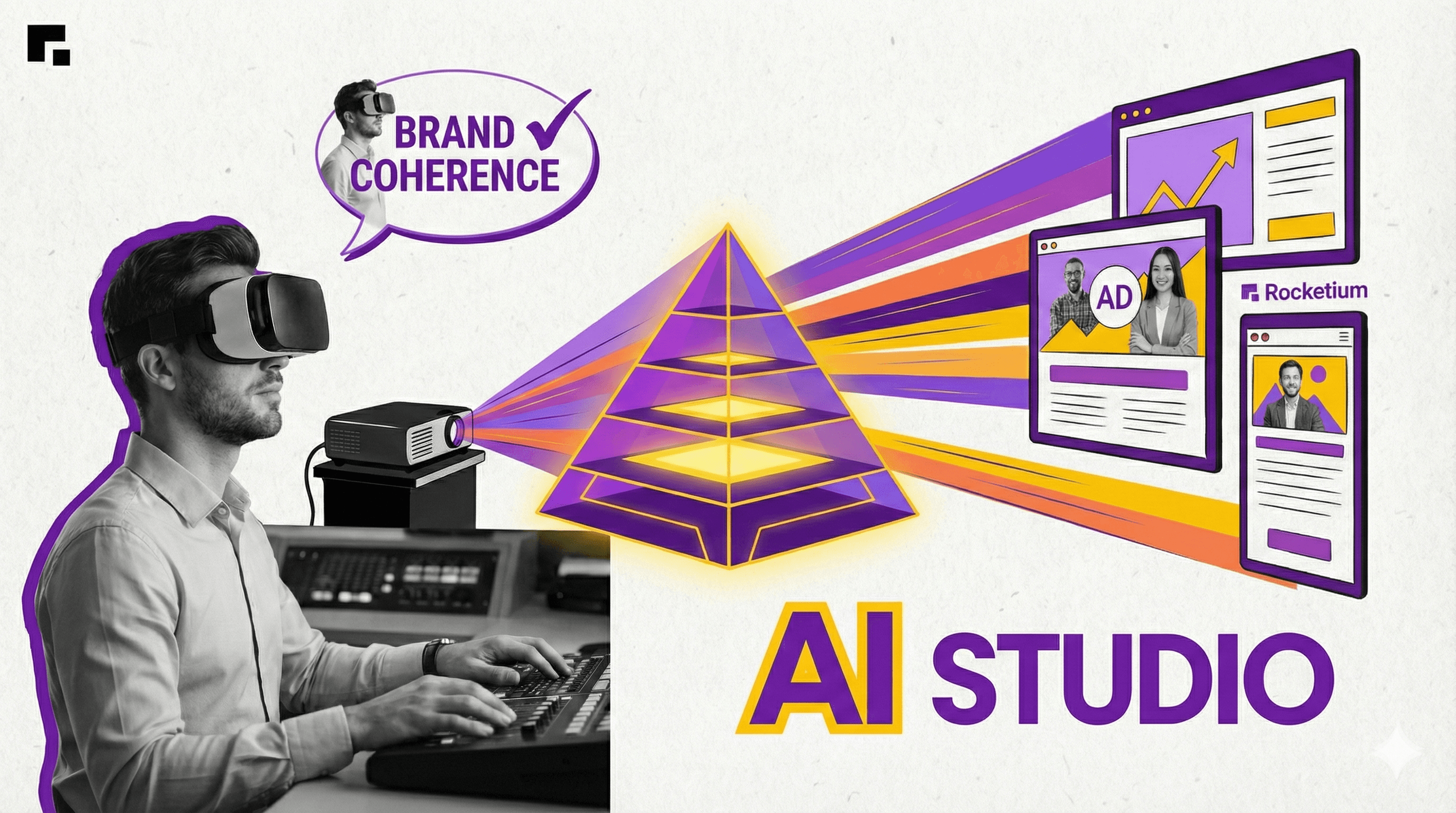
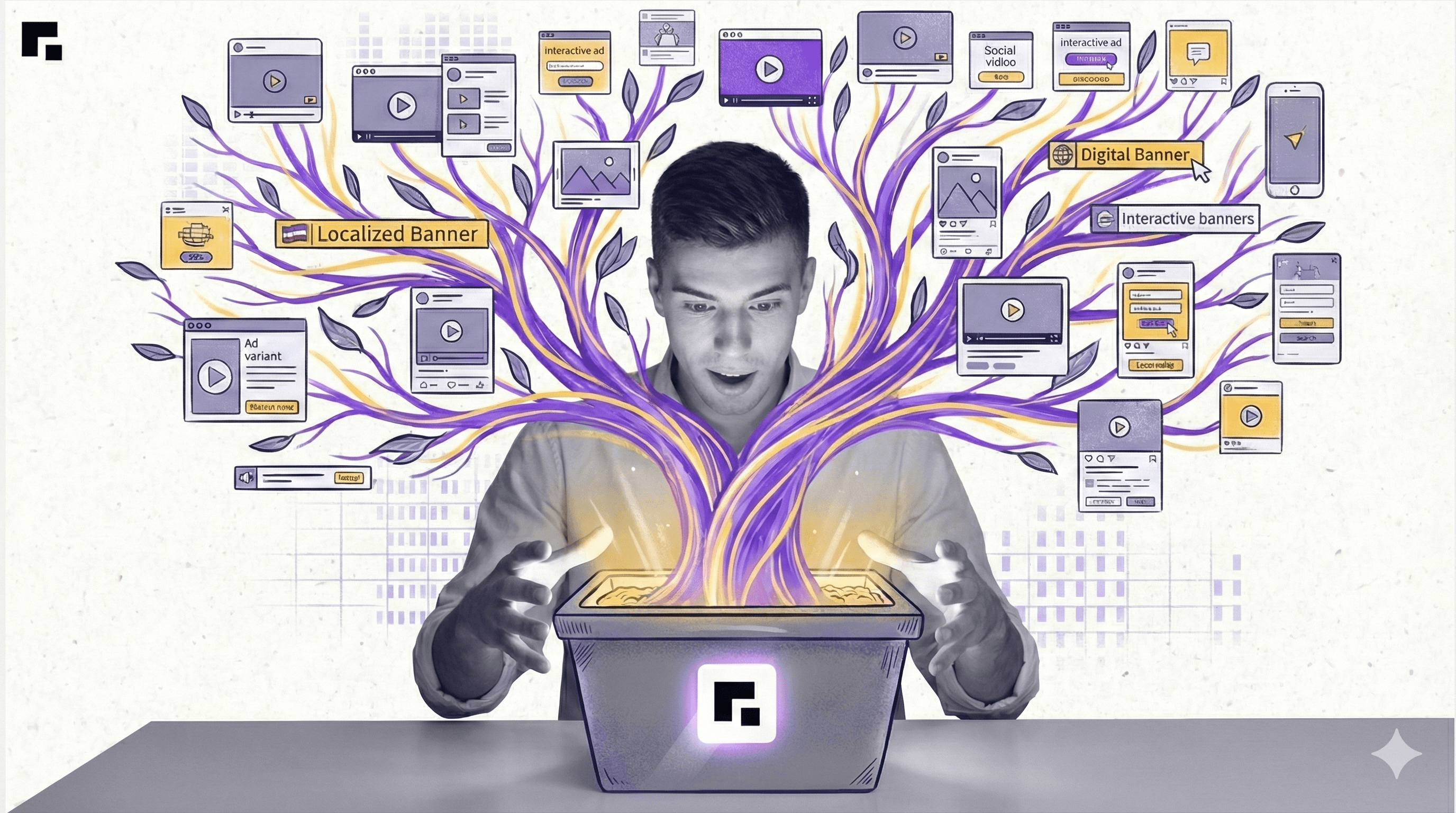
This requires new levels of speed, consistency, and data integration. Instead of one hero campaign pushed everywhere, brands need thousands of variants that adapt to different audiences across ads, social, email, retail media networks, marketplaces, and in-app surfaces.
This trend reframes the role of design itself. Creative is no longer just the spotlight moment; it becomes a stabilizing layer that ensures brand coherence across an expanding number of outputs. Personalization at scale becomes a prerequisite for performance.
Role Evolution: The Creative Director Becomes a Curator of Possibilities
The modern Creative Director role is evolving due to market pressure, tooling, and the rise of generative AI. The job is shifting from being the sole idea generator to becoming the curator of possibilities who orchestrates the creative ecosystem.
Creative Directors are now functioning as:
• strategist and editor
• brand steward and data translator
• experimentation lead and curator
Velocity has become a competitive advantage. Iteration cycles that once took ten rounds must compress into four, then two — especially as personalization, testing, and multi-format asset generation become core to performance marketing.
Taste still matters, but throughput and feedback loops now sit alongside it as essential creative skills.
AI Tools for Creative Teams: Agentic AI — Collaboration Over Replacement
Early generative AI tools behaved like prompt slot machines: type a prompt, hope for something usable, adjust, retry, repeat. This may work for ideation but breaks under the requirements of brand compliance, multi-channel distribution, and performance-led creative work.
Agentic AI represents the next major shift in creative technology. Instead of attempting to replace creative talent, agentic systems use software to automate the operational and repetitive components of creative production — resizing, formatting, versioning, compliance, testing, and distribution — while keeping the creative director in the driver’s seat.
This unlocks creative automation without sacrificing originality. It gives teams fewer blank canvases and more intelligent starting points. It allows experimentation without burning resources. And most importantly, it treats AI as a collaborator, not a replacement.
Creativity isn’t dying. It’s expanding. The profession is moving into a world where the scaffolding around creativity becomes intelligent, enabling teams to produce higher-volume, higher-quality, more personalized content without compromising the soul of creative work.
Watch the full video conversation here: