
The hidden cost of manual creative versioning
Article
Cameron Nelson
|
Sr. Marketing Manager
Reviewed By Satej Sirur
Manual creative versioning rarely feels like a cost concern. It is often viewed as routine execution, a necessary part of adapting campaigns across channels, formats, and audiences. Yet as marketing environments scale, this seemingly minor workflow begins to exert outsized influence on speed, efficiency, and performance. Ultimately, directly impacting revenue.
What appears to be simple production work gradually becomes operational drag.
More revisions → More resizing → More approvals → More campaign delays
The friction is rarely dramatic. It is cumulative.
Where Versioning Friction Actually Comes From
Creative variation is now fundamental to marketing performance. New channels require new formats. New audiences require tailored messaging. New placements demand adaptations. Each adjustment may seem minor in isolation, but together they create a steady drain on velocity.
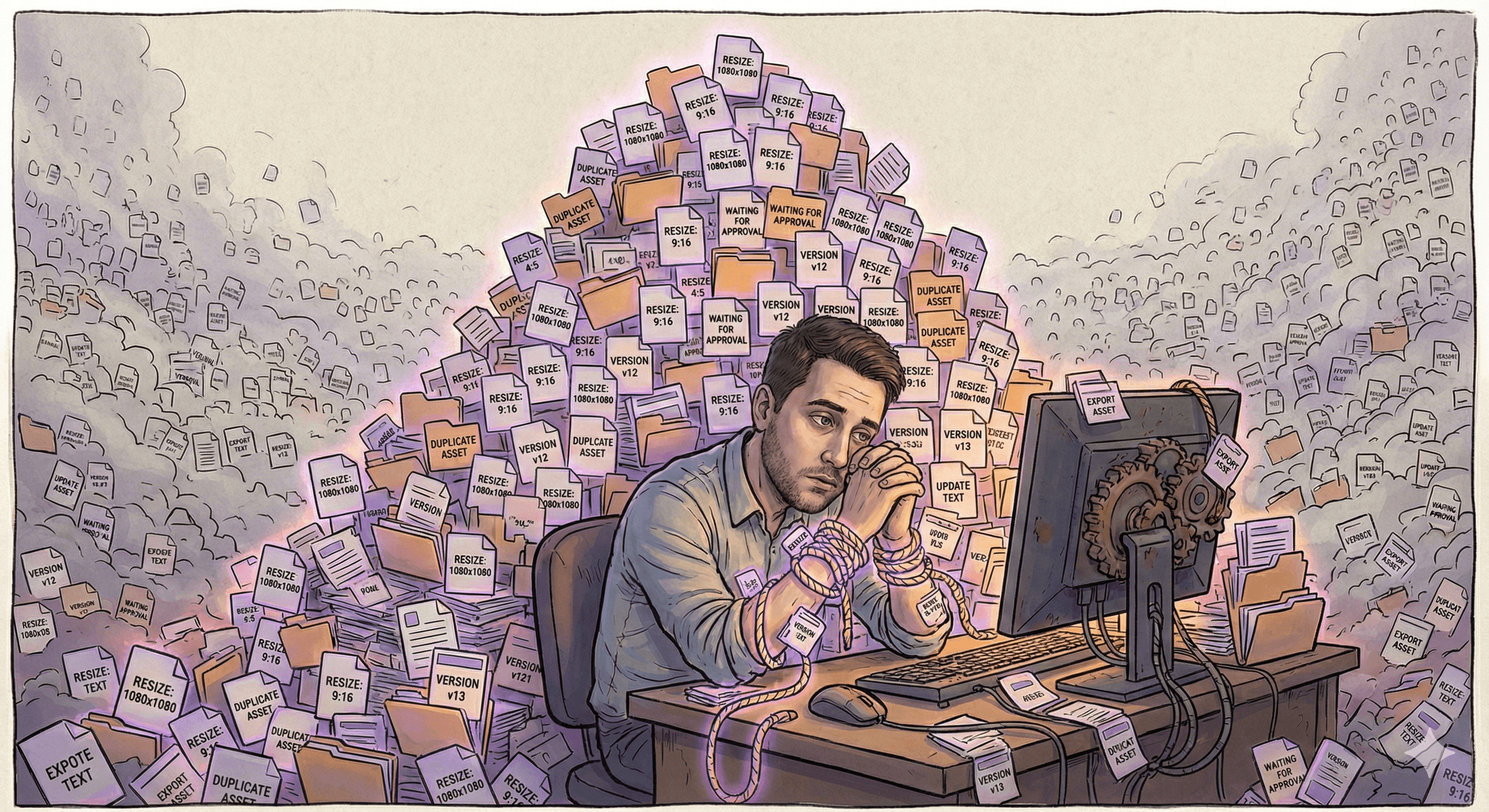
Hours spent duplicating assets.
Cycles lost in approvals.
Campaigns slowed by mechanical work.
Over time, the workflow itself becomes the constraint.
How Manual Versioning Limits Growth
Modern growth strategies depend on speed, variation, and accuracy. Testing programs require constant iteration. Personalization initiatives demand scale. Media investments expect rapid creative support. When versioning remains manual, scale introduces drag that few teams fully measure.
Media budgets outpace creative readiness.
Testing cycles compress.
Launch timelines slip.
What feels like production overhead begins to influence performance outcomes.
Most organizations attempt to solve this pressure by increasing output. More assets. More variations. More iterations. But volume alone rarely resolves the underlying problem. Without systemization, increased production simply amplifies complexity.
More files → More approvals → More coordination overhead → More noise.
The Strategic Shift High Performing Marketing Teams Make
High performing marketing teams approach versioning differently. They treat it as a creative workflow challenge rather than a series of recurring tasks. Instead of absorbing mechanical work into creative processes, they design content strategies that eliminate manual friction.
Automation replaces duplication.
Rules replace manual checks.
Infrastructure replaces effort.
The objective is not producing more versions. It is removing the friction of producing versions.
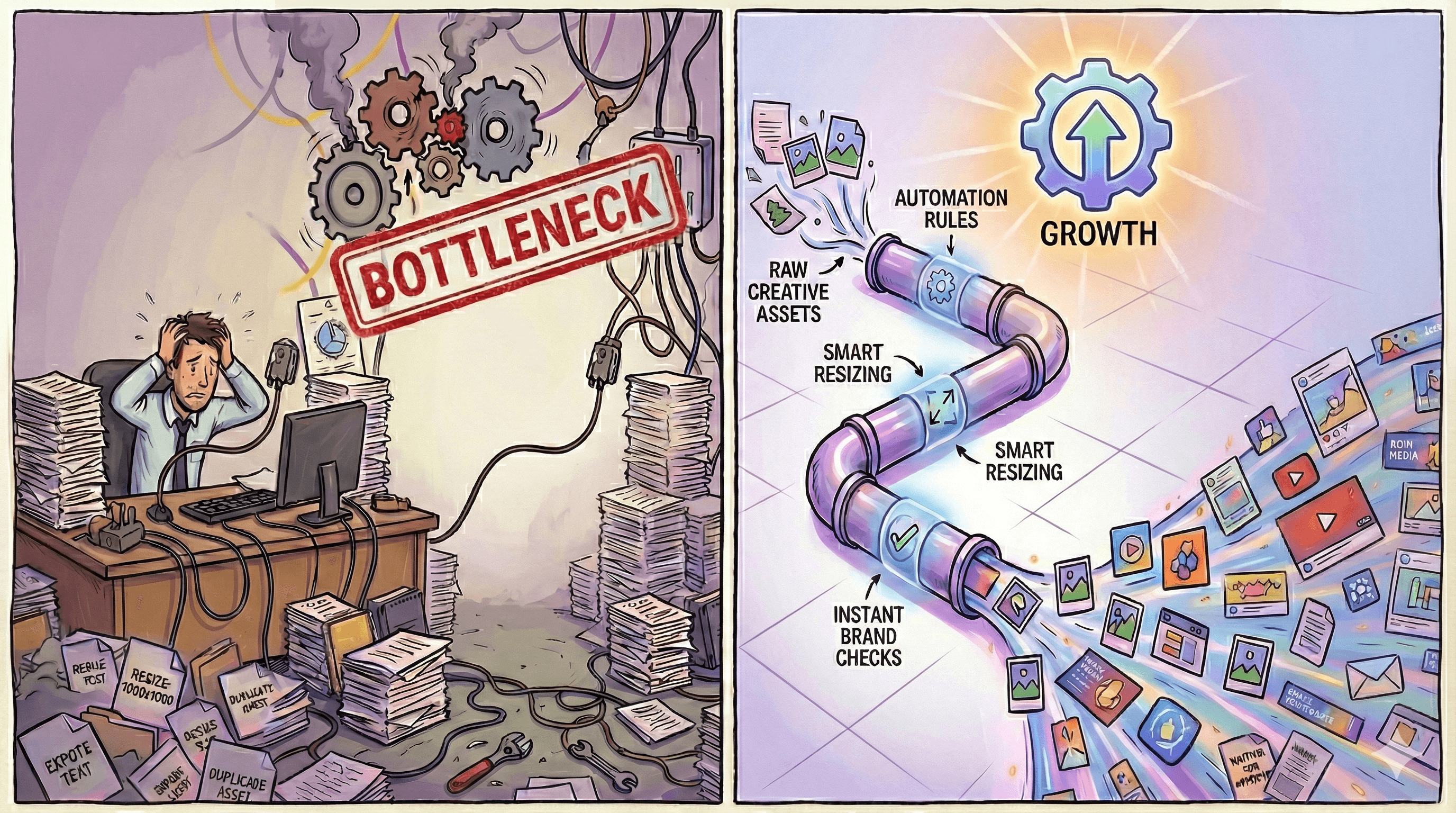
Creative variation is no longer optional in modern marketing environments. It is foundational to performance marketing, retail media strategies, and personalization at scale. Manual versioning rarely fails suddenly. It gradually limits experimentation, slows optimization, and reduces operational efficiency.
The teams that gain structural advantages are not working faster. They are removing the work that slows them down.
Because when variation becomes effortless, scale becomes sustainable. And when scale becomes sustainable, performance compounds.