
Welcome your new teammate: The Creative Scientist
Article
Satej Sirur
|
Co-founder and CEO
Reviewed By Satej Sirur
Picture this. It is the holiday season, and your organisation is launching its biggest campaign of the year. The creative team is juggling photo shoots, new design concepts, coordination with agencies, and approvals. The marketing team is working on emails, ads, and e-commerce campaigns across a dozen platforms. Everyone is busy and hoping for the best holiday campaign yet.
Weeks later, the metrics trickle in. Some assets performed brilliantly while others flopped. Was it the holiday theme? The testimonial in the video? The product badge in the corner?
We are moving past the era where our gut is the only source of strategy. It is gut backed by data. However, teams juggling multiple campaigns, channels, and creative assets often struggle to understand what truly drives engagement.
This is where a Creative Scientist steps in. They blend design sensibilities with analytical rigor, turning post-campaign guesswork into pre-campaign foresight and helping teams design campaigns that are not only beautiful but measurably effective.
What is a Creative Scientist?
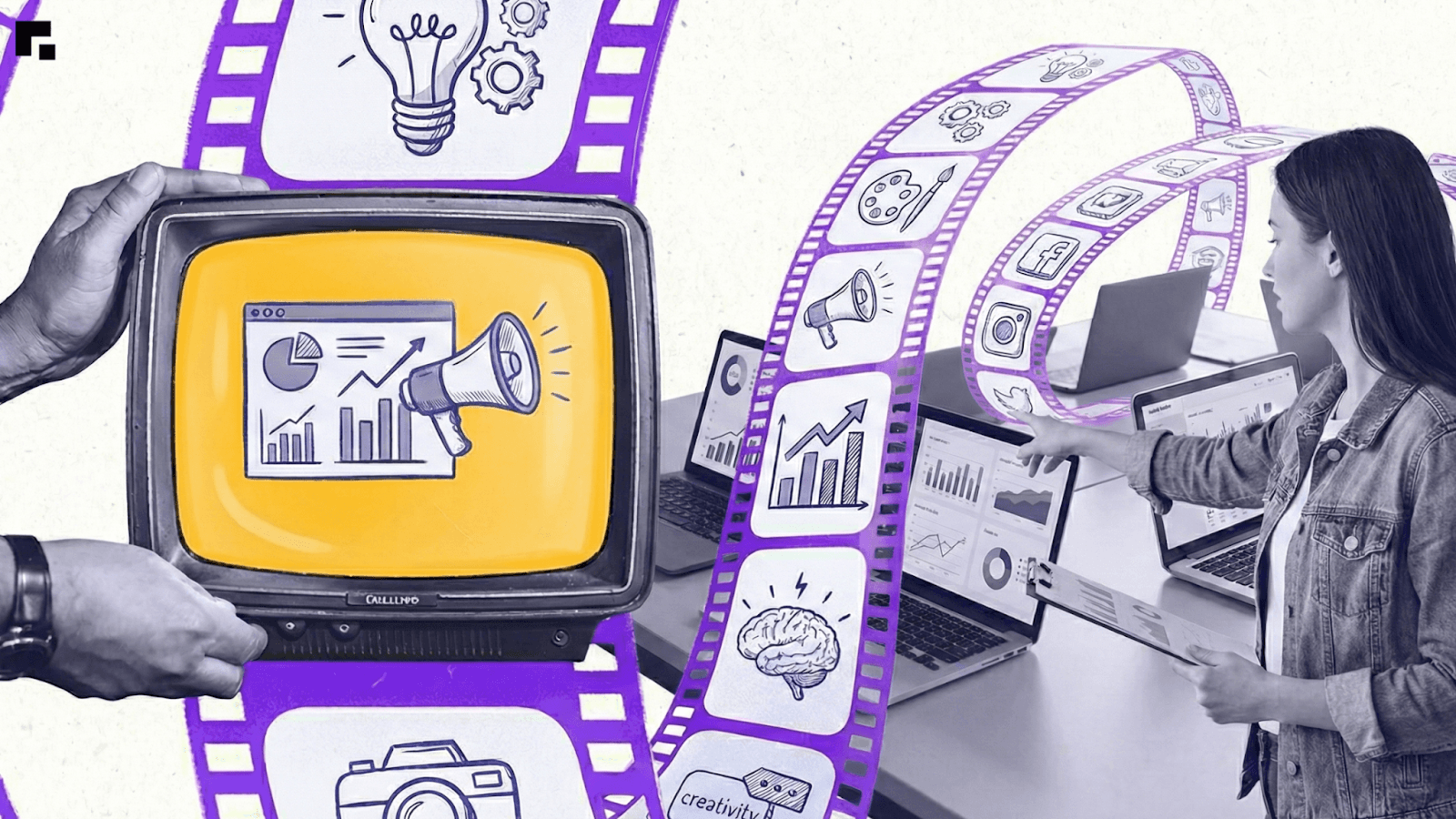
Attributes
A Creative Scientist sits at the intersection of creative, data, and marketing teams. They are:
Hands-on operators - They are deeply embedded with both marketing and creative teams. They understand audience behaviour across channels. They know specific campaigns and their objectives.
Creative - They know the brand's nuances and see the impact of creative choices. They provide actionable input to creative teams on imagery, colours, badges, or animation styles.
Analytical - They collect and clean data across multiple platforms. They form hypotheses and measure their performance systematically. They go beyond vanity metrics to find the actual levers of growth.
Collaborative - They use insights to guide future campaigns. They work hand-in-hand with marketing, creative, leadership, and finance teams to maximise impact.
They ask questions like:
Did showing real people work better only in holiday campaigns or universally?
Which creative formats drive long-term engagement vs. immediate conversions?
What increases trust more - badge, testimonial, partner logo?
How does performance vary by age group and region?
Responsibilities
Here are typical responsibilities of a Creative Scientist.
Performance and creative data gathering - Pull data from multiple marketing platforms. Standardise metrics across campaigns to make apples-to-apples comparisons. Break down assets into attributes: images vs. videos, real people vs. animation, testimonials, badges, text overlays, and more. Measure the performance of each attribute variation.
Hypothesis-driven planning - Create testable assumptions (think: “videos with testimonials will convert better during festive campaigns”). Plan experiments with creative teams to validate these hypotheses.
Insight generation - Go beyond basic KPIs like conversion rates or CTRs. Explore complex patterns: cross-campaign trends, seasonal performance variations, and audience-specific behaviours.
Creative implementation - Work with design teams to generate data-informed creative ideas. Use creative analytics tools to quickly prototype or iterate on new assets.
Real-world examples
Here are a few real-world scenarios that illustrate the value of a Creative Scientist.
Holiday campaign for an e-commerce brand
Without a Creative Scientist: The team produces a mix of assets, hoping some resonate. Metrics are reviewed after launch, too late to optimise.
With a Creative Scientist: Every asset is broken down by format, color palette, messaging, and other visual choices. Hypotheses are formed:
“Animated assets featuring AI-generated images instead of real people perform best in Q4 for 25–34-year-olds.”
“On TikTok, videos with testimonials outperform static banners with product shots.”
Campaigns are tested, iterated, and optimized before going live, ensuring budget is spent on high-performing creatives.
E-commerce product page visuals
Problem: A brand notices certain listings underperform despite strong demand.
Solution: The Creative Scientist analyses the visual assets: hero image composition, badge placements, lifestyle vs. product-only shots. Insights reveal that images showing real-life usage and badges increase conversions. The creative team now has actionable guidance to redesign product visuals effectively.
Multi-channel campaigns
A lifestyle brand wants to run the same asset across Instagram, YouTube, and email. The Creative Scientist comes up with asset variations to test on each channel.
Instagram - Short video loops with vibrant graphics
YouTube - 15-second videos showing the production in action
E-mail - Static banners with offer badges
This ensures that every channel gets the asset most likely to perform, maximizing ROI and engagement.
How other teams benefit from a Creative Scientist

Marketing
Demystify creative work - For marketers steeped in the world of media and performance, creative work can seem a black box and, in many unfortunate cases, subordinate to targeting, bidding, and optimization. Creative Scientists bridge this chasm and show the tangible impact of creative work.
Better campaign ROI - Marketers know the creative assets that are underperforming but lack the data from those platforms to inform what changes they need to make. Creative Scientists remove the guesswork and help suggest creative changes based on data.
More iterations faster - Creative Scientists eliminate the wasteful effort in making creative assets that are likely to underperform. This frees up time to work on the right iterations for each campaign, audience, and objective.
Creative
Demystify performance - While some creative folks embrace analytics and data, a good chunk trembles at the sight of pivot tables, dashboards, and even spreadsheets. Instead of throwing creative teams into the deep end of the analytics pool, Creative Scientsts can simplify metrics and make them more consumable by creative teams.
More strategic work - Instead of just being an in-house agency, creative teams can partner with Creative Scientists to run the right experiments and be a proactive partner to performance and e-commerce teams.
Creative validation - Data can cut down heated battles around creative decisions. Creative teams who find other teams or leaders taking arbitrary decisions about their work can partner with Creative Scientists to make data-driven decisions and leave ego and titles out of the process.
Leadership
Higher growth - Creative testing is often an overlooked part of campaign planning and optimization. Creative Scientists can make this integral to the process and ensure the right creative assets are used across channels and the right experiments are tested.
Freedom from decisions - Forrester makes a hard-hitting point that the creative process has been influenced for too long by the opinions of the highest-paid people in the room. On the other hand, the highest-paid people are asked to make decisions about something they do not work on daily. Leaders can free themselves by handing this responsibility to Creative Scientists.
Opportunities to experiment - Creative Scientists free up time and budget lost on wasteful gut-based decisions. Leaders can reinvest this into experiments and new initiatives they have always meant to try. Hundreds of marketers and creatives reported in our exhaustive State of Creative Ops survey that they lack the time to
Finance
Lower costs - Creative Scientists save budget wasted on assets that do not perform and creative tests that have no chance to succeed. Finance loves Creative Scientists because they know marketing dollars are not spent throwing darts at the board.
Higher productivity - A lot of work goes into making advertising assets. Agencies, copywriters, external studios, freelancers, in-house teams, translators, and more are employed in varying capacities over the year to craft the creative communication for campaigns. Creative Scientists reduce the effort wasted on making, reviewing, and redoing assets that are not effective.
How do you become a Creative Scientist?
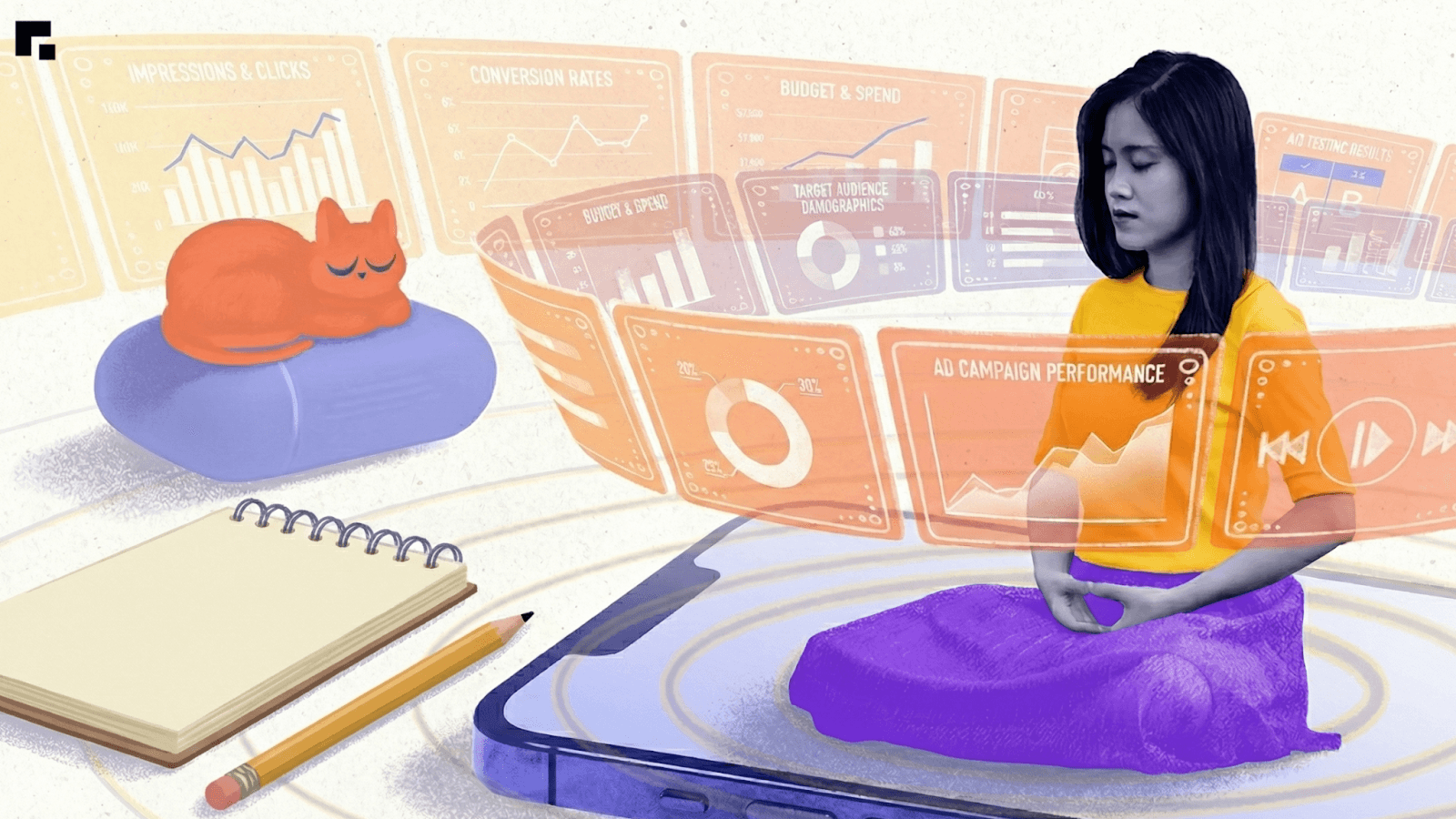
The role of a Creative Scientist is not yet on job portals but the work already exists in every modern growth team. It is the work of someone who moves comfortably between storytelling and spreadsheets, behaviour and data, instinct and insight. Here is how someone actually becomes a Creative Scientist today.
Core skills of a Creative Scientist
Analytical curiosity
Not full-blown statistics. Not hardcore engineering. Just the willingness to ask and answer questions like:
What patterns do I see?
What might be driving them?
What would happen if we changed X?
What else might explain this?
This is hypothesis-driven thinking, the backbone of science, and the secret weapon of great creative teams. They should know how to pull data from platforms, clean up spreadsheets, analyze trends, compare performance across variables, and use tools like Rocketium to break down creative attributes. They do not need to be a data engineer or analyst but they need to be pattern detectives.
Creative sensibility
A Creative Scientist does not need to paint or storyboard or write scripts. They need taste, cultural awareness, an eye for how visuals influence behaviour, basic understanding of storytelling frameworks, and empathy for how audiences feel. A Creative scientist operates beyond the canvas. Instead of technical execution, they rely on cultural fluency, taste, and a deep understanding of behavioral psychology. It is about understanding the creative work well enough to improve its impact.
Ability to simplify complex information
Modern marketing assets - videos, banners, PDP images, email banners - all contain dozens of components: CTA, colour palette, models, layout, offer, and so much more. A Creative Scientist must be able to recognise, map, and manipulate these components like variables in an experiment. They then need to convert these insights into action. This requires explaining data visually, telling a narrative (“here is what we learned, here is what it means”), influencing designers without dictating, getting leadership excited, and helping marketing teams make decisions with confidence. They are translators - not just analysts.
Roadmap for those think they are ‘non-creative’ or ‘not a numbers person’ type
Creative Scientists often start exactly here. Think you are ‘not creative’? Creativity is not artistry, it is problem-framing - a muscle built through exposure + observation. You can build creative sensibility by:
studying high-performing ads across platforms
learning basic storytelling structures
understanding colour psychology, composition, and layout
watching user behaviour and decoding emotional cues
practising giving creative feedback using “why,” not “like/do not like”
If you think you are “not data-driven”, data literacy is more pattern recognition than statistics. Data intuition develops faster than people think, especially when applied to creative decisions. You can build data confidence by:
learning to read dashboards from Amazon, Google Ads, Meta, TikTok
practising calculating CTR, CVR, ROAS, and other common metrics
doing simple Excel: filters, pivots, conditional formatting
forming hypotheses before looking at data
comparing 2–3 creatives to see which attributes differ
asking why certain assets perform better
The key is not mastery - it is hybridization. Two 80% skills make one 150% role.
Roadmap for those who are ready
Learn your audience deeply - Read how users behave on different platforms, talk with customer teams, study competitors.
Break down creatives into attributes - List what makes one ad different from another - visual, textual, structural.
Pull and clean data from campaigns - Learn to get data from different platforms, standardize the format, and extract relevant creative attributes.
Form hypotheses for upcoming campaigns - For example, “UGC with pets worked better last quarter”, “lighter backgrounds increase CTR”, and so on.
Collaborate with creative teams - Share insights, not instructions. Inspire, do not dictate.
Build feedback loops - Look back after every campaign. What happened? Why? What does it mean for the next cycle?
Hiring a Creative Scientist
Here are resources for teams who want to hire their first Creative Scientist.
Job description
Summary
We are hiring a Creative Scientist - a hybrid creative-strategist-analyst who can decode what makes a great creative and use that intelligence to shape how we tell our brand’s story. This role blends AI, analytics, and art direction. You will use curiosity, taste, and data to help our marketing and creative teams run more effective campaigns.
What you will do
Collaborate with creative, marketing, and data teams to improve campaign outcomes
Identify patterns in winning ads across platforms, audiences, and formats
Build creative hypotheses, run experiments, and synthesize insights
Translate findings into clear recommendations for brands and internal teams
Shape templates, rules, and guidance for future creative output
Who you are
A designer, art director, creative strategist, or performance marketer with strong analytical instincts
Strong creative taste + curiosity about what drives performance
Comfortable with experimentation, iteration, and structured thinking
Excellent at explaining creative choices with clarity
Interested in shaping how AI augments creative craft
Interview process
Intro call (30 minutes) - Informal conversation focused on the candidate’s background, motivations, and how they think about creative + AI. Share what the role looks like day-to-day.
Creative analysis exercise (take-home, 60–90 minutes) - Share performance data of 20+ real advertising assets and ask the candidate to identify what is working / not working, suggest 2–3 hypotheses, propose variants they would test. Evaluate taste, reasoning, and clarity, not polish.
Discussion of the take-home (45 minutes) - Ask the candidate to walk through the thinking behind their recommendations. This is a collaborative session to see how they reason.
Cross-functional panel (60 minutes) - Get the candidate to meet the teams they will work with - brand, creative, e-commerce, performance. Look at communication clarity, experimentation mindset, comfort mixing creativity + data, ability to bring teams together.
Leader conversation (30 minutes) - Final discussion to assess values, curiosity, ambition, and whether they would enjoy building a new discipline with you.
Creative Scientists in the industry
Aditya Deb (E-Commerce Performance Marketing Manager, Beiersdorf) works with agency, analytics, creative, e-commerce, and performance teams to deliver outsize results consistently.
Bruno Brinati (Senior Growth Marketing Manager, Rappi) influences creative strategy so assets drive performance, and co-built an AI-powered tool to evaluate creative performance, generate insights, and identify opportunities to scale impact.
Zach Clarey (Senior Technical Program Manager, Amazon Prime Video) combines statistics, machine leading, Generative AI, and project management to improve creative operations at global scale.
Summary
You do not become a Creative Scientist by job title or formal training. You become one by observing like a researcher, imagining like an artist, experimenting like a marketer, synthesising like an analyst, and collaborating like a strategist. And because so few people sit comfortably in this intersection, those who do become disproportionately valuable for modern teams. For those who choose this path, we congratulate you on becoming one of the first Creative Scientists in the industry!